


From Rejection to Reinvention: Haiti’s Hand-Painted Olympic Uniforms
Published Feb 10, 2026
After a last-minute change, the Edouard Duval-Carrié inspired uniforms arrived just days before the opening ceremony, turning absence into statement and pressure into creativity.
Haiti’s original 2026 Winter Olympics uniforms, designed by Stella Jean, featured a painting of Haitian revolutionary leader Toussaint Louverture by Haitian-born American artist Edouard Duval-Carrié.
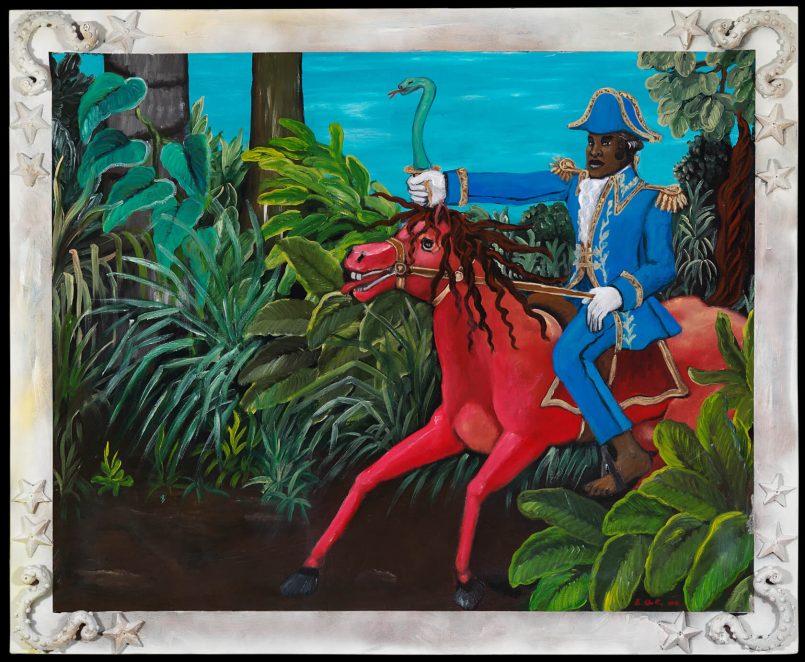
The artwork depicts Louverture, formally dressed, but barefoot, riding a red horse and holding a snake instead of a sword. In Haitian Voodoo, the snake represents Damballa, a spirit associated with wisdom and peace. Jean described the painting as capturing “the Haitian spirit,” celebrating Louverture’s leadership in defeating European powers and paving the way for Haitian independence.
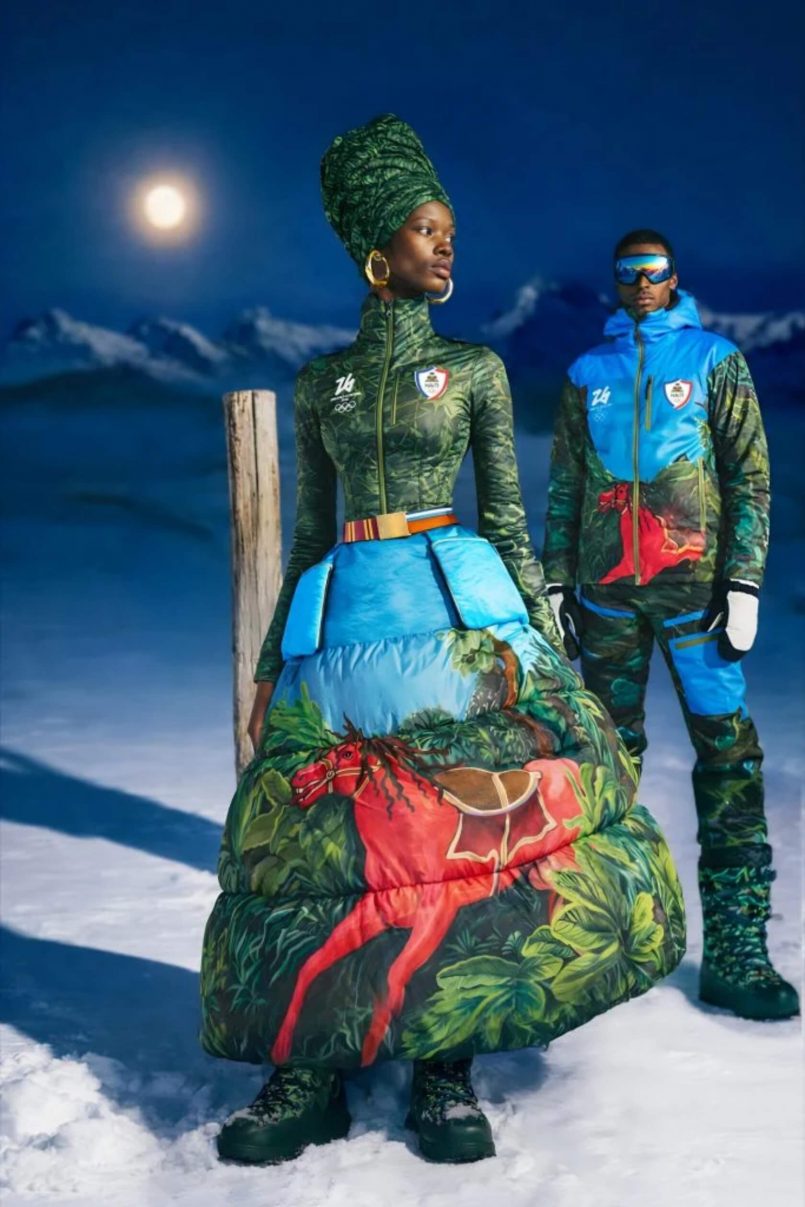
On January 4, roughly one month before the Olympics, the IOC determined that the inclusion of Louverture constituted political propaganda and violated its rules against political symbols on uniforms.
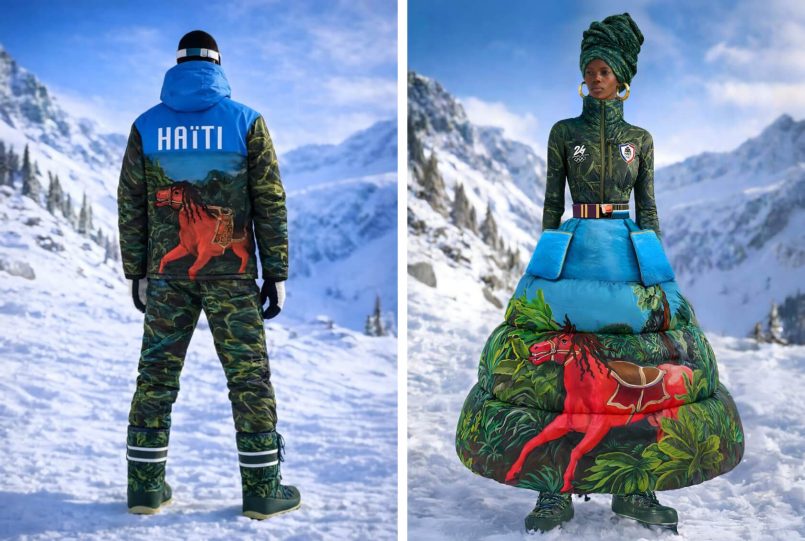
In response, Jean and her team worked intensively to adapt the design. Artisans removed Louverture and the snake while preserving the landscape and the horse, repainting the uniforms entirely by hand. According to Jean, the final uniforms were delivered to Milan on Wednesday, two days before the opening ceremony.
“The General’s absence speaks louder than his presence ever could.”
Stella Jean
Jean emphasizes that the redesign did not erase the historical and cultural spirit of Louverture. She noted that the uniforms have already generated significant international attention, highlighting the team’s creativity and resilience under extreme time pressure.
“Two hundred years later? It’s amazing that Toussaint would represent a political statement.”
Edouard Duval-Carrié in a interview with the Miami Herald
The uniforms now stand as a testament to Haiti’s artistic ingenuity and cultural storytelling. Even without the central figure of Louverture, the hand-painted designs convey movement, strength, and history, showing how constraints can sometimes amplify the impact of a work of art.










More
articles
Inspiration
in your inbox
Amazing art & design, never any spam.
We care about protecting your data. Please refer to our Privacy Policy for more.

- Advertising
- Architecture
- Art
- Branding
- Fashion & Beauty
- Gaming
- Graphic Design
- Illustration
- Industrial Design
- Interior Design
- Logo Design
- Packaging Design
- Photography
- Pop Culture
- Print Design
- Product Design
- Technology
- Typography
- UX & UI Design
- Vehicle Design
- Video & Motion
© 2026 Inspiration Grid, all rights reserved. Some of our posts may contain affiliate links to partner brands. We earn a small commission if you click the link and make a purchase. There is no extra cost to you, so it’s just a nice way to help support the site. All images, videos, and other content posted on the site is attributed to their creators and original sources. If you see something wrong here or you would like to have it removed, please contact us.